

Digital audio ads are advertisements delivered through streaming music services, podcasts, and other on-demand audio apps, targeted by listener behavior and device rather than broadcast frequency. For businesses already advertising on the radio, they fill in the gaps and adds a layer of targeting without replacing what's already working.
That distinction matters. Digital audio isn't a newer, better version of radio. It's a different environment with different strengths, and it earns its place in a media plan.
This guide covers what digital audio ads are, how they work alongside radio and other channels, and when adding them to your media mix actually makes sense.
Key takeaways
- Digital audio ads run on streaming platforms and podcasts, reaching listeners in on-demand, on-device environments that traditional radio doesn't fully cover.
- Digital audio ad spending reached $8.4 billion in 2025, up 10.2% year over year, according to the IAB/PwC Internet Advertising Revenue Report.
- 79% of the U.S. population, about 228 million people, listens to digital audio monthly, per Edison Research and National Public Media's 2025 Infinite Dial report.
- Radio provides the foundation, and digital audio adds lift. With AM/FM radio and station streams reaching 84% of adults 12+ each month, digital audio enhances reach and frequency.
- The right mix depends on your audience, budget, and goals. A local media partner can help you figure out where digital audio fits before you spend a dollar on it.

What are digital audio ads?
Digital audio ads are audio commercials delivered through internet-connected platforms instead of an AM/FM signal. That includes streaming music services, podcast episodes, and audio apps on phones, computers, smart speakers, and connected cars.
Three things set digital audio apart from traditional radio:
- Device-based delivery. Ads reach a specific listener on a specific device, not everyone tuned to a frequency at once.
- Listener-based targeting. Campaigns can target by location, interests, or listening habits instead of relying on a station's overall audience.
- On-demand environments. Much of digital audio is listened to on demand, whenever the listener chooses, rather than live at a scheduled time.
For a plain-language rundown of terms like impressions and programmatic buying that come up in digital campaigns, this glossary of digital marketing terms is a good starting point.
Why does digital audio belong in media mix planning?
Digital audio compliments radio by adding reach, increasing frequency, and helping breands connect with audiences across multiple platforms.
Radio delivers broad local reach and consistent frequency, especially in the car. A significant share of listening now happens through apps, smart speakers, and connected devices, on the listener's own schedule. Digital audio ads reach people in those moments.
Adding digital audio to a plan does three things:
- Fills reach gaps. It reaches listeners in on-demand and app-based environments radio doesn't touch.
- Reinforces the message. Hearing the same idea across radio and digital audio builds recall without repeating the exact same ad in the exact same place.
- Supports frequency without oversaturation. Instead of buying more radio spots to hit a frequency goal, digital audio adds touchpoints across a different part of the listener's day.
For more on how to think about reach and frequency across channels, this breakdown of reach vs. spend as an advertising KPI is worth a look before you set a budget.
How do digital audio ads work with other channels?
Digital audio rarely stands alone in a media plan. It's usually most effective layered with the channels a business already uses.
Radio and digital audio together
Radio builds broad awareness and trust through consistent, familiar reach. Digital audio reinforces that message in the moments radio can't reach, like a podcast episode during a commute-free workday or a streaming playlist at the gym. Together, they cover more of a listener's day without duplicating the same ad in the same place. Radio and digital advertising working as a pair is a longer look at how that pairing plays out in practice.
Digital audio and visual channels
Digital audio also supports display, video, and connected TV campaigns by adding an audio touchpoint to a mostly visual plan. A listener who hears a brand on a podcast and later sees a display ad or a streaming TV spot gets two senses' worth of exposure instead of one, which tends to build recognition faster than either channel alone.
How digital audio compares to radio and podcast ads
Each audio format plays a different role in a media plan. Here's how they stack up:
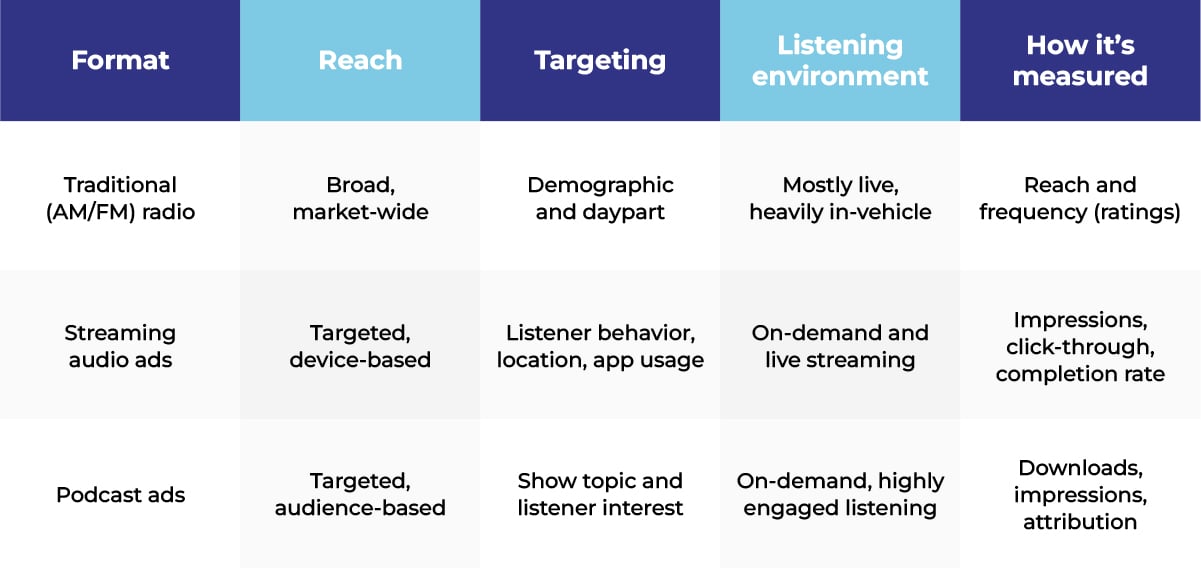
Radio drives broad local reach. Streaming audio and podcasts help reinforce the message with targeted audiences and additional listening occasions. For a closer look, see streaming audio advertising vs. traditional radio.
What are the benefits of adding digital audio ads?
Three benefits come up most often when businesses add digital audio to their mix:
- Targeted reach. Campaigns can focus on a location, audience, or listening habit.
- Brand-safe, ad-friendly environments. Spoken-word digital audio is heavily ad-supported. 97% of spoken-word digital audio content includes advertising, compared to 47% of music content, according to Edison Research and National Public Media's 2025 Infinite Dial report. That makes formats like podcasts a reliable, expected place for a brand message to appear.
- Engaged listening. On-demand audio, especially podcasts, tends to hold attention differently than general listening, since the listener actively chose the content.
When do digital audio ads make the most sense?
Digital audio ads tend to be worth adding when a business:
- Wants to reach a specific audience or location more precisely than radio's broad reach allows.
- Is already running radio and wants to extend frequency.
- Is building an integrated campaign across radio, digital, and video, and wants an audio touchpoint that reinforces the others.
They tend to matter less for businesses still building basic local awareness with a limited budget. In that case, radio's broad reach is usually the stronger starting point, with digital audio layered in once that foundation is in place.
Frequently asked questions
What is digital audio advertising?
Digital audio advertising refers to audio ads delivered through internet-connected platforms like streaming music services, podcasts, and audio apps, rather than an AM/FM broadcast signal. It's typically targeted by device, listener behavior, or location instead of a station's overall audience.
Is digital audio advertising the same as podcast advertising?
No. Podcast advertising is one format within digital audio advertising. Digital audio also includes ads on streaming music platforms and other on-demand audio apps, each with slightly different targeting and listening environments.
Do digital audio ads replace traditional radio advertising?
No. Digital audio ads work best alongside radio. Radio delivers the broadest local reach and frequency, while digital audio fills in listening moments radio doesn't reach, like on-demand and app-based listening.
How is digital audio advertising priced?
Pricing varies by platform, targeting, and ad length, and typically depends on the specific mix a media plan calls for. Rather than quoting a number that may not reflect current market rates, the most accurate way to see what it would cost for your goals is to talk through your budget with a local media planner.
Which local businesses benefit most from digital audio ads?
Businesses that already have a base of radio or local awareness and want to reach specific audiences more precisely tend to benefit most, along with businesses building integrated campaigns across radio, digital, and video that want an audio touchpoint tying the plan together.
Build a balanced media mix
Digital audio ads aren't a replacement for radio, and they're not a trend to chase for its own sake. They're one more way to reach the people already listening, in the moments radio doesn't cover.
The right mix of radio, streaming audio, podcasts, and video depends on your audience, your goals, and your budget, not a one-size-fits-all formula. Leighton Media can help you figure out where digital audio actually fits into your plan, and where it doesn't. Talk to a marketing expert to build a media mix that works for your business.